- הרשמה לניוזלטר
- מועדון המשפיעים
- שימושון
- אודות
- תרום לנו
- צור קשר

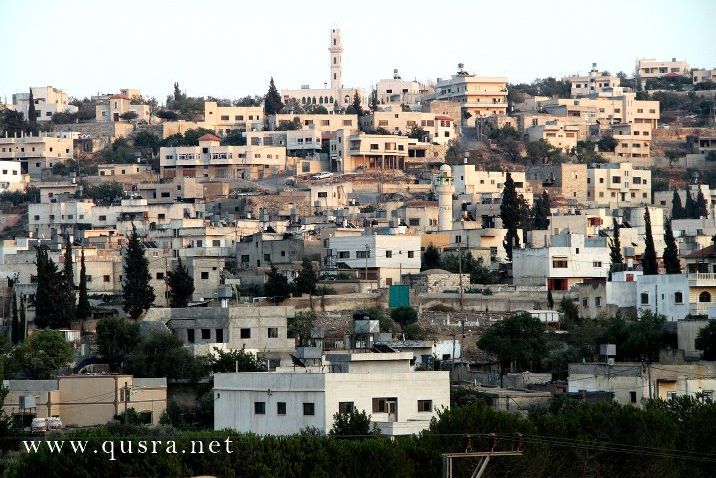
The media storm over "settler violence," which erupted around claims of a "siege" on a house in the hostile village of Qusra, was an unusually charged affair. If some storms can at least be understood in terms of what triggered them, this one was built on a campaign — a successful one, it must be said — constructing a narrative of "siege" following the erection of an outpost by settlers from "Tel Talpiot." A well-publicized PR effort by left-wing organizations circulated a photograph showing nothing more than soldiers praying together with residents at the outpost, which was absurdly transformed into an incriminating image accompanied by demands to prosecute the soldiers.
Following the campaign, Major General Avi Bluth arrived at the site along with Border Police commander Nisso Guetta, and immediately ordered the confiscation of the hilltop's Ranger security vehicle. When several youths attempted to block the confiscation, the images were presented as "the siege continuing." On Saturday night two weeks ago, demolition forces already arrived and destroyed the homes at Tel Talpiot and another nearby hilltop, after which a full regular battalion was stationed there. In the report that follows, we will attempt to describe how the uproar reached such an absurd point, and why it signals one of the greatest challenges facing the settlement enterprise.
The hilltop "Tel Talpiot," named after the nearby village of Talfit, is one of dozens of new settlement points established in Area B over the past year — despite the fact that the government has not officially annulled the Oslo Accords, and official representatives have even stated their opposition to establishing settlements in Area B. Some of these points have been evacuated and demolished time and again, but beneath the surface a policy shift is evident, as is often the case: de facto change happens long before de jure declarations — and that is what has occurred over the past year. More and more strategic points have been established in Area B, backed by Knesset members and even statements by ministers calling for the annulment of the Oslo Accords.
That is what happened at "Tel Talpiot" — known to Arabs as Jabal Ein Eina — a high point overlooking territory designated as Area B under the Oslo Accords, located right in the heart of Samaria, between the dense settlement bloc of Shilo and the Trans-Samaria Highway connecting Tapuah Junction to Ma'ale Efraim. Jabal Ein Eina is the second-highest peak in Samaria after Mount Ebal. No one who has visited the site fails to be immediately struck by its strategic importance — that was the case as well when Israeli Diaspora Affairs Minister Amichai Chikli visited, releasing a video from the field explaining the immense importance of holding onto the remaining strategic points within the territory of the Oslo-designated areas.
But in Judea and Samaria, being Judea and Samaria, there is no vacuum. For years, residents of the Shilo bloc looked toward the top of the hill and dreamed of the day Jews would succeed in settling there — but when it finally happened, it came at the very last moment, after Arabs from the surrounding villages had already begun climbing upward with construction, paving roads, and attempting to establish facts on the ground that would turn the folly of Oslo into an almost fait accompli.
But what actually sparked the wave of condemnations from the right — not for the first time — was specifically the reaction from the American administration. Notably, it was the U.S. Ambassador to Israel, Mike Huckabee — considered a staunch friend of Israel and a supporter of the settlement enterprise in Judea and Samaria — whose remark in this case referring to the settlers as "Israeli terrorists" caused alarm. That is the reason many on the right panicked, and without checking the facts too closely, rushed to join the pile-on. Israel Hayom journalist Ariel Kahana described the events as "atrocities" — with no connection to what had actually occurred — and even the Yesha Council issued an unnecessary and puzzling condemnation.
This is not the first time. A few months ago, a wave erupted in right-wing media against the "hilltop youth." There too, the trigger was concern over statements from the U.S. embassy.
So why did this particular campaign catch on so strongly? The answer is tied specifically to the homeowner at the center of the "siege." The man behind the campaign is Louai Abu Reda — a U.S.-based businessman who built the house climbing toward the strategic hilltop. The house itself is inhabited by his brother, Qusai, who was documented participating in an attack on a Jewish shepherd at "Tel Talpiot," and was arrested and released shortly after. It was Abu Reda's American citizenship that mobilized Ambassador Huckabee to the incident, automatically putting pressure on the Yesha Council and right-wing journalists, who thoughtlessly joined the frenzy — which, rather than being contained, only grew larger and larger.
The story of the Abu Reda family from Qusra is not merely a local incident — it illustrates a major challenge the settlement enterprise must confront. Several brothers from the Abu Reda family of the village of Qusra emigrated to the United States, some of whom succeeded in business. Louai Abu Reda, who moved in the early 2000s, according to his own publicity, owns a network of car washes and gas stations in Toledo, Ohio. Some of the brothers still live in Qusra; some have built luxury homes on the village's outskirts.
One must recognize the phenomenon: contrary to what one might expect, many Arabs from Judea and Samaria who emigrated to the United States have not abandoned the Palestinian cause — rather, they see themselves as something like Palestinian ambassadors, not unlike the way Diaspora Jewry, by comparison, experiences itself. They act not only through donations or by building homes that expand the village, but in many cases also serve as an international political lobby on behalf of those who remained, carrying out the "sumud" (steadfastness) on their behalf. As they see it, on the day a Palestinian state is established, they will return.
Like many villages in Judea and Samaria, the village of Qusra has its own dedicated news site intended for villagers living around the world, meant to preserve ties and identity. Louai Abu Reda is one of the site's founders — living in the U.S. but fully part of the struggle of Qusra's Arab residents. He donates to projects in the village, and has even said he spent two months there so his daughter could connect with her Palestinian identity. Last week he arrived on a widely publicized flight to his "besieged" home and hung a large American flag on it, in a PR move worthy of admiration.
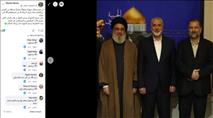
The Abu Reda family's case in Qusra is not exceptional. A few months ago, a storm erupted over claims that settlers had entered a house built on the outskirts of Khirbet Abu Falah. In that case too, the homeowner was a U.S. citizen, named Musa'ab al-Kaouk, from Turmus Ayya, who had built the house far from the village. Then too, Mike Huckabee demanded answers following the Palestinian lobbying effort mounted in the United States. Documentation published at the time proved that al-Kaouk is an outspoken Hamas supporter who celebrated October 7 from his residence in the United States, views Nasrallah as a hero, and simultaneously runs a campaign on "settler violence."
But it is not only avowed Hamas supporters. One of the influential figures shaping the "settler violence" discourse in the U.S. is Ihab Hassan — originally from the Taybeh area — who exerts pressure on the Christian sector in the United States. The village of Taybeh is considered the last Christian village remaining in the Ramallah area, after Muslims suppressed the local Christian population for years. Even under the Palestinian Authority, life for Christians has not always been rosy, yet the village still has a fair number of nationalist Christian activists. The most famous was Archbishop Capucci, who was ultimately caught smuggling weapons for the PLO — but even today, leading priests in Taybeh are identified with the Fatah terror organization. According to a report published last month in Haaretz, the village of Taybeh is steadily emptying out; according to that report, 15 families and dozens of young people have left the Christian village near Ramallah in recent years. Nevertheless, activists from the village still hold influence over public opinion in the United States. Ihab Hassan opposes Hamas — and, as is often the case, this only compounds the challenge: how to counter propaganda for a Palestinian state coming specifically from Fatah, which enjoys greater sympathy in international public opinion.
Here is a figure published last week by the Regavim organization: in the affluent village of Turmus Ayya in the Binyamin region, an almost unbelievable statistic holds — roughly 90% of residents hold American citizenship, the highest concentration anywhere in the world outside the U.S. itself. That same village elected Laafi Shalabi as head of its council while he was sitting in prison for aiding the terrorist who carried out the attack at Tapuah Junction, in which Yehuda Guetta, may God avenge his blood, was murdered. Turmus Ayya residents elected him specifically to demonstrate public support for him. The attacker in that terror attack, Muntasir Shalabi, is a relative of the council head, and is himself a U.S. citizen and Hamas supporter who lived split between the United States and Judea and Samaria — running a smoke-shop in America, while residing in a villa in the village of Turmus Ayya.
But Turmus Ayya is not alone: there are large numbers of Arab U.S. citizens living either in America, in Judea and Samaria, or shuttling between the two. Among them are a series of Arab villages in the eastern Binyamin region: Sinjil, Mazra'a al-Sharqiya, Silwad, Taybeh, Rammun, Deir Dibwan, Beitin, and Ein Yabrud. Some of these villages sit at the very heart of the struggle over land involving the farms and hilltops. These are areas located in the heart of Samaria — with the Arura bloc and Ramallah on one side of Route 60, and the large bloc of eastern Binyamin villages on the other. Anyone driving those roads sees a huge number of buildings that are clearly empty, or half-empty. Unlike the PA's takeover projects, in many of these cases the money comes from U.S. citizens who support the Palestinian cause and are building villas combining a nationalist dimension with the accumulation of real-estate reserves — assets that will serve them on the day they realize the vision of the "right of return."
The Regavim movement laid out what has become, in effect, a method: extremist elements and Fatah activists initiate disturbances and friction on the ground; the moment an American-citizen terrorist is harmed — even one who never set foot in the U.S. — a federal U.S. review mechanism is automatically triggered, and the narrative in Washington instantly flips from "a terrorist who attacked soldiers" to "an American citizen harmed by IDF fire."
Why specifically the villages of eastern Binyamin? It turns out that, historically, the first wave of emigration from these villages to America began nearly 100 years ago. Migrants from villages that were then very poor arrived in the United States, and some of them later sponsored relatives for green cards. After the Six Day War a reverse migration took place, and the press at the time dubbed the area "Little America." Both the migrants and returnees built expensive villas; even those who moved to live in the U.S. preferred to avoid selling their land, choosing instead to build a house on it and leave it locked up, so the family would not lose its foothold in the place.
Meeting this challenge requires, first and foremost, developing an effective public-diplomacy apparatus — one that, instead of presenting an apologetic line that harms the pioneers on the ground, would conduct active, effective advocacy working not only to present the positive side of the settlement enterprise in Judea and Samaria, but also to wage advocacy against the enemy. For example, anyone who visits the English Wikipedia page for the village of Qusra will find a long list of "settler crimes" — even the lynching incident involving schoolchildren touring the area is presented in a slanted manner. By contrast, there is no mention of terror attacks carried out by militants from the village — such as the terrorist Abd al-Aziz Hassan, who was released in the latest prisoner exchange and received a special congratulatory statement from the Qusra municipality, which read: "The Qusra municipality congratulates the village's son, released prisoner Abd al-Aziz Abd al-Haq Hassan, on his return to freedom after 25 years of imprisonment. With pride and great appreciation" — or, for another example, a blessing for the "martyrs" of October 7, as published last week by Channel 14 journalist Omri Chaim.
Why does all this matter? We've often heard the slogan 'what goes for Gaza goes for Judea and Samaria' - except in practice, most of us don't really believe it. The proof: while in the Gaza Strip it was understood that there was no choice but to level the buildings one by one, in Judea and Samaria we still hear the slogans about "innocent civilians" and the enemy's "social fabric." If we understand the scale of the danger and want to address the threat before the next massacre, we must prepare in advance on the battlefield of global public opinion — not only for defense, but also for offensive action: conquest, expulsion, and settlement.
One of the necessary steps in this regard is promoting land acquisition by Jews, including in Area B. Currently, purchasing homes in Judea and Samaria is possible mainly in Area C, where registration takes place through the Civil Administration — unlike Area B, where the Palestinian Authority threatens severe penalties against anyone who sells a house to a Jew. This reality creates a situation in which even an Arab who has decided to emigrate abroad generally does not sell his land, which keeps him tied to the land and the territory — meaning the desire to emigrate does not translate into severing ties to the land. To address this, the first step should be establishing an Israeli registry to protect transactions in Areas A/B. Rather than claiming, at this initial stage, that it replaces the Palestinian land registry, it should allow a buyer to deposit with Israel a contract, chain of title, power of attorney, proof of payment, and survey map. After a check against forgeries, the state would register a "right recognized for purposes of Israeli law."
In the long term, Israel needs a new foreign policy. Because of the shift in how young people around the world relate to Israel — a shift stemming from a genuine change that has taken place — Israel is no longer the small, pitiable, persecuted state that can rely on the Holocaust narrative and the fight against antisemitism to defend itself and receive an international quota of sympathy. Now that Israel has understood it has no choice but to act as a regional power, it must also change its approach in the realm of public diplomacy.
And what will happen the day after the midterm elections? The relatively easy pushback against pressure from a very pro-Israel administration is something of a preview of a moment that quite a few figures in the settlement movement fear. On November 3, 2026, midterm elections are set to take place in the United States, and in Israel there is real concern. Various forecasting models predict a Democratic victory in the battle for the House of Representatives. The troubling picture relates to the shift within the Democratic Party in the U.S. regarding Israel — and all the more so regarding settlement in Judea and Samaria. A recent New York Times poll found that 57% of Democrats support the Palestinians, compared to just 17% who support Israel. Within the Democratic establishment, anti-Israel and pro-Palestinian figures are gaining momentum — such as New York City Mayor Mamdani, and a number of figures who won Democratic primaries.
Whoever's easy solution in the face of international pressure is to condemn, to distance, to halt the momentum of settlement, or to throw up their hands in the face of the Palestinian takeover, will find themselves retreating further and further — because that same lobby in the U.S. is not truly troubled only by the hilltop youth; as far as it is concerned, all the government's "annexation" moves fall into the same package.
This is not merely theoretical — it has been the case for many years, as Israel refrained from critical actions and abandoned parts of Area C, which the Palestinian Authority went on to take over with the assistance of the European Union or bodies acting on behalf of the U.S. administration, and refrained from evacuating Khan al-Ahmar, among other cases. True, today there is a more sympathetic administration — but the change did not begin there; the chronological order was reversed. It was precisely when a right-wing government rose in Israel and advanced settlement even against a relatively hostile administration that help arrived, by divine providence, when Trump was elected to a second term.