- הרשמה לניוזלטר
- מועדון המשפיעים
- שימושון
- אודות
- תרום לנו
- צור קשר

An investigation by Hakol Hayehudi and the Lavi organization reveals that the Civil Administration is spending millions of shekels in developing Palestinian Authority agriculture and is encouraging the expansion of "Palestinian" agriculture in vast areas.
According to an official report of the Civil Administration’s Agricultural Officer, millions have been spent over the years to promote “Palestinian agriculture.” In 2024 alone, the Civil Administration allocated approximately 650,000 shekels to this effort. The official report for 2024 shows that Israeli taxpayers are funding investments in the enemy's agriculture, including in villages that are particularly hostile. According to the report, there is a potential for Arab agriculture on more than 100,000 additional dunams and the Civil Administration requests the construction of reservoirs and infrastructure to enable this expansion.
Alongside activities such as forest protection and pest monitoring, the report proudly lists “projects in cooperation with the PA,” including assistance to pineapple growers, cucumber farmers, and fish breeders. The report states: “The budget given to the Agricultural Unit to support the advancement of Palestinian agriculture leads to the further development of agriculture and its impact on the Palestinian economy.”
While Israel assists in the expansion of the enemy's agriculture, Palestinian leaders openly declare that agriculture is a weapon of war. In a speech of former PA Prime Minister Mohammad Shtayyeh to PA Agriculture Ministry officials he explained that the Agriculture Ministry is on the front line of the struggle against Israel, since the war is not about bread—it is about land.
Some projects are carried out in cooperation with Israeli agricultural businesses, such as Yad Mordechai, which supplies biological pest control for strawberry and pepper greenhouses.
The list of villages benefiting from Israeli taxpayer-funded aid is eye-opening. Among the cucumber growers profiting from Israeli support are Kabatiya and al-Yamun in the Jenin district—two outstanding hotbeds of jihadist hostility. Kabatiya has long been a terror stronghold, from the days of the first Intifada. In a recent article in Al Jazeera, Kabatiya was praised as “the city of stubborn clinging to the land and a bastion of Palestinian resistance.” Al-Yamun is also a source of much terror.. While IDF soldiers risk their lives raiding these terror strongholds at night, the Civil Administration funnels money into their agricultural associations.
The report also highlights the substantial expansion of Arab agriculture and the profits the enemy gains from the sale of agricultural produce to Israel.
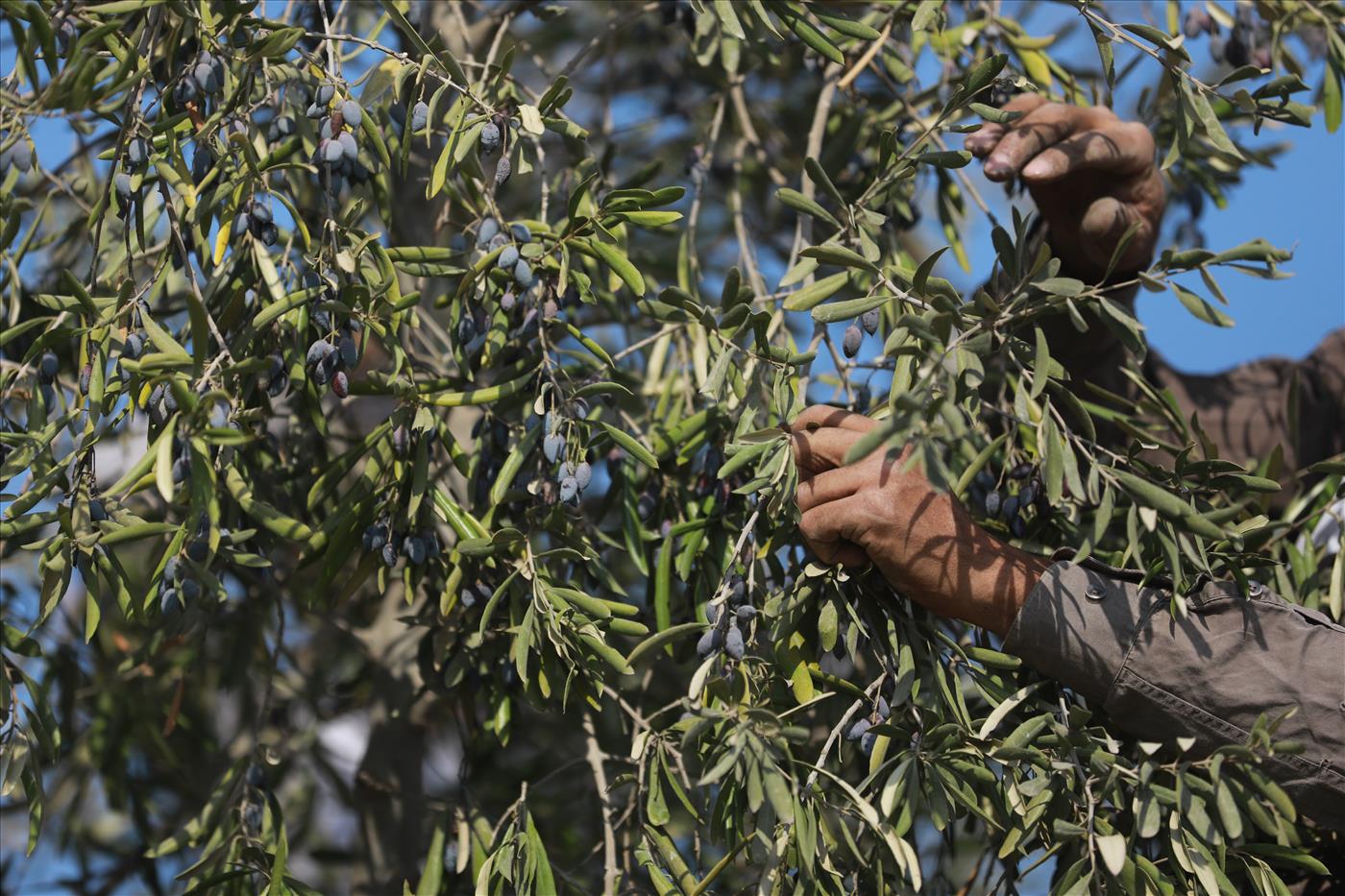
According to Civil Administration data, the area of productive olive groves grew by 67% in just a few years—from 457,000 dunams in 2014 to 766,000 in 2018. Although in later years the numbers dropped slightly, we have reason to suspect that the data is outdated. The fact that the numbers for the years 2018 – 2021 are exactly the same may indicate that they were copied from year to year. As a result we don't really know what changed during that period.
Hakol Hayehudi investigations have exposed a concerted effort of Hamas, in the context of “agricultural jihad”, to expand olive groves, with a particular focus on strategic areas—Area C, near Jewish communities, and along the security fence.
The report further notes that restrictions on Palestinian laborers entering Israel pushed more workers into agriculture in Judea and Samaria, though at far lower wages.
The report reveals that Arab farmers in Judea and Samaria earned 381 million shekels in 2024 from the sale of agricultural produce to Israel. A striking example is “baby cucumbers” for industry (primarily pickling), worth 132 million shekels. These cucumbers alone account for 90% of PA cucumber production and 60–65% of cucumbers used by Israeli industry.
Another troubling revelation in the report is that 20–25% of this produce enters Israel through illegal smuggling, either bypassing official crossings or without being recorded at those crossings.
The Lavi organization, together with Regavim, recently submitted a warning preceding legal action. They told us “This is an illegal and irrational policy. If decision-makers do not stop the expansion of agricultural land in Judea and Samaria in favor of the PA, we will petition the courts.”
We turned to the Settlement Directorate in the Defense Ministry with the results of our investigation. They were surprised by the information presented, saying they were unaware of these projects.
The office of Bezalel Smotrich, a minister in the Defence Ministry, responded: “We thank Hakol Hayehudi for raising the issue. It will be thoroughly examined, and any necessary conclusions will be addressed. Note that under the Settlement Directorate, unprecedented grazing grants were approved for Israeli agriculture. This, together with the wave of new farming communities which receive massive support from the Settlement Directorate, are effecting a change for the better regarding the open areas in Judea and Samaria. The Minister has instructed that this policy will continue and intensify in the very near future.”
Menash Shmueli of Regavim warned: “The silent takeover through agricultural work is causing the loss of hundreds of thousands of dunams in Judea and Samaria. The Arabs exploit the Jordanian ‘Cultivation and Possession Law,’ which stipulates that anyone who cultivates land for ten years gains ownership of it. They also take advantage of the Civil Administration’s leniency and its tendency to turn a blind eye to such encroachments. On the most basic level, it is far cheaper and simpler to plant sweet potatoes and plow with a donkey than to bring in cement trucks and construct a building.”
He added: “We’ve grown accustomed to seeing agricultural work—donkeys and pruning shears along the roads, but we fail to grasp the bigger picture: a disaster of astronomical proportions that is changing reality in Judea and Samaria. Our research shows that in Hebron Hills alone, over 100,000 dunams of Area C have been lost to agricultural encroachment.”
Shmueli further added: “When examining the data, one must consider agricultural encroachments from 2019 and earlier, because those lands are now treated by the government as private property. The government will not enforce there at all—even if buildings are constructed. Agricultural takeover may look innocent, but in reality it is massive in scale. It serves to create a territorial link between Arab villages and thus block the expansion of Jewish communities or the paving of new roads.”