- הרשמה לניוזלטר
- מועדון המשפיעים
- שימושון
- אודות
- תרום לנו
- צור קשר

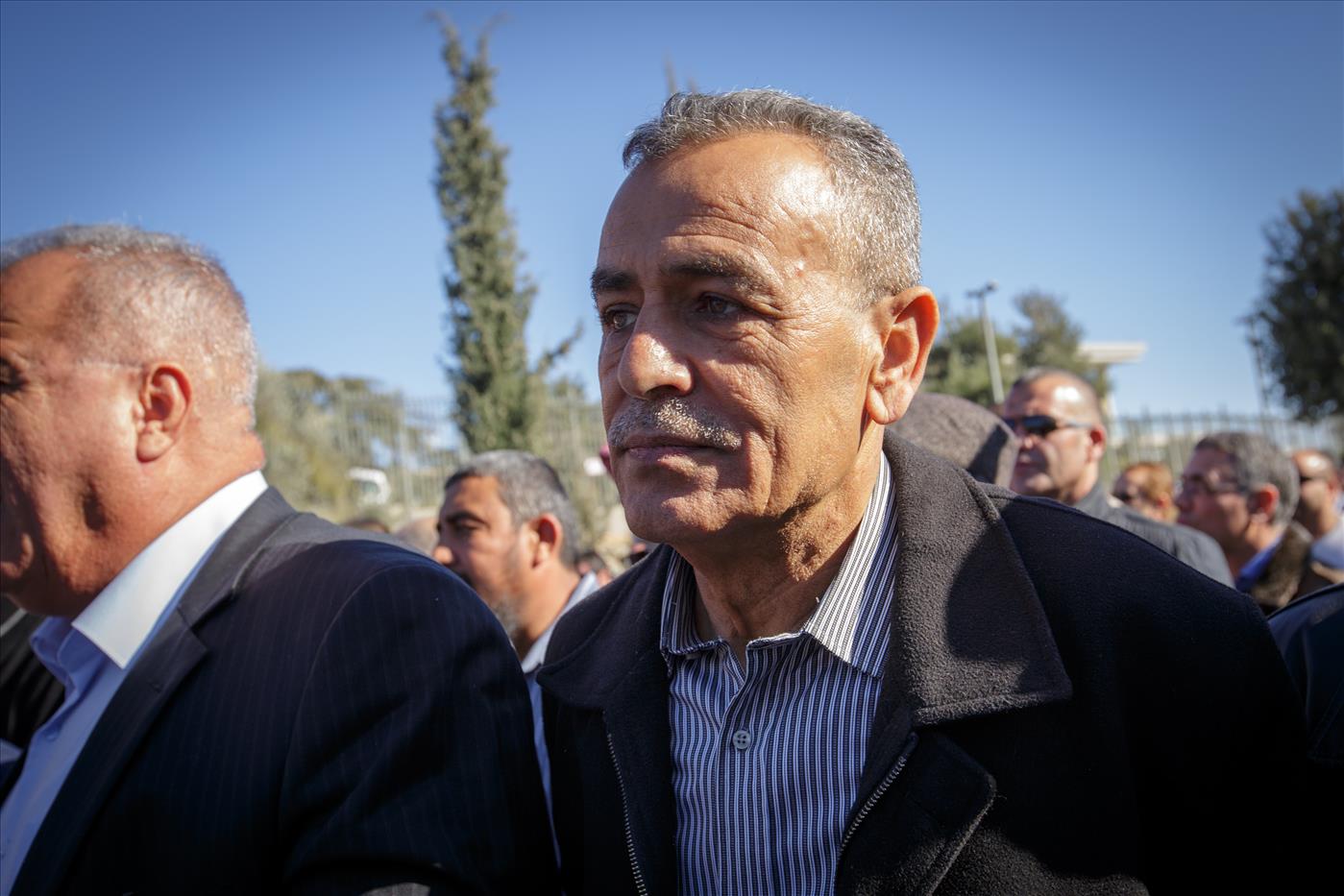
This past Saturday, after years of internal unrest, factional disputes, and friction among the various parties and ideological streams within Israel’s Arab society, Jamal Zahalka—former Knesset member and former head of Balad—was chosen to lead the Committee. Zahalka, who in his high‑school years was arrested, convicted, and sentenced to prison for PLO organizing in his hometown of Kafr Qara, was among the founders of Balad together with Azmi Bishara—who fled the country after spying for Hezbollah.
Professionally, Zahalka trained as a pharmacist. Politically, he championed the doctrine of a “state of all its citizens,” rejecting the recognition of Israel as the nation‑state of the Jewish people by Israel’s Arab minority.
Zahalka won the election with a majority of 53 votes out of 73 eligible voters, after securing support not only from Balad representatives but also from Hadash activists, the northern branch of the Islamic Movement, and others. In the end, he faced only one opponent—Nivin Abu Rahmon, herself a former Balad Knesset member—after three additional candidates, who understood they had no real chance, withdrew from the race, claiming the composition of the voting body was biased.
In his victory speech, Zahalka declared that the Follow-Up Committee would remain “a bastion of nationalism in its positions and direction.” At the same time, he stressed that the central mission is to safeguard the internal unity of the Arab public and to turn the Committee into an institution with real influence: “Unity is the cornerstone of the Follow-Up Committee, and we will protect it as we protect our own eyes.” Judging by his statements, Zahalka is signaling an activist agenda that combines nationalist demands with day‑to‑day issues facing Arab society, such as land and housing, and the rampant violence of criminal organizations.
Another issue Zahalka addressed after his election is the Committee’s international activity against Israel, centered on accusations of apartheid and discrimination against Arab citizens. This campaign, which the Follow-Up Committee has already been advancing in recent years through meetings with embassies and international representatives, is now expected to intensify under Zahalka’s leadership.
Even before the elections, representatives of the Southern Branch of the Islamic Movement and the Ra’am party boycotted the vote, claiming that the movement was not properly represented in the composition of the electoral body. That body was determined according to the historical size of the parties, rather than the current reality in which, according to the polls, Ra’am is pulling in a number of mandates similar to the combined strength of the other Arab parties. Yet despite the boycott — at least publicly — Ra’am continues to present itself as part of the Follow‑Up Committee. Mansour Abbas even phoned to congratulate Zahalka on his election, describing the boycott as a “democratic protest” and stressing: “Our hand is extended towards reform and genuine change.”
Whether the Southern Branch and Ra’am under Mansour Abbas will continue to participate in the Follow‑Up Committee’s activities is a critical question for the committee’s continued legitimacy as the supposed unifying body of Israel’s Arab society. It also raises the question of whether Abbas will continue to recognize the Committee as the supreme political framework, despite the deepening strategic rift between Ra’am and Balad. On the other hand, it’s worth remembering that only six years ago, after the breakup of the Joint List, Ra’am and Balad ran together — an unexpected alliance in which Ra’am found common ground with Balad rather than with Hadash, whose activists had grown accustomed to dominating Arab political leadership.
On the surface, one can expect that in the very near future we will see the impact of the style Zahalka brings with him: a harsher anti‑Israel posture and an even more extreme nationalist tone than under Barakeh, paired with a more polished, academic style of operation — the familiar Balad formula for entrenching a Palestinian national identity among Israel’s Arab citizens.
In recent years, Balad has also been the driving force behind the push for structural change, reforms, and a redefinition of the Follow‑Up Committee. Zahalka himself has long been a fierce critic of the Committee’s current structure and has argued that it must be transformed into a representative, relevant body connected to the public, with an updated formula for representation. According to assessments, Zahalka will try to sharpen the Committee’s nationalist position while attempting to preserve it as a unifying force; one that advances the Palestinian identity of Israel’s Arabs not merely as a protest movement but as a proactive organization.
The real question is whether he can bring Ra’am’s people — and the Bedouin in the Negev — into the fold. If he succeeds, we can expect a significant strengthening of nationalist sentiment among Israel’s Arab population.