- הרשמה לניוזלטר
- מועדון המשפיעים
- שימושון
- אודות
- תרום לנו
- צור קשר

According to PCBS data, the Palestinian Authority (PA) approved 18,230 housing units in the "West Bank" (Judea and Samaria) in 2023. However, in the subsequent year, 2024, during which the war raged, the PA approved only 13,819 housing units in Judea and Samaria.
These figures pertain to structures that received official building permits from the PA and apparently encompass all areas of Judea and Samaria. Although we lack complete data on the extent of internal illegal construction (i.e., construction without PA approval), this figure nevertheless indicates a significant decrease in the scope of construction.
This data is further supported by a recent report published by the PCBS in collaboration with the UN's International Labour Organization (ILO), which attests to a sharp drop in productivity within the PA's construction sector.
According to a recent report by the ILO in partnership with the Palestinian Central Bureau of Statistics, there was a 45% drop in the output of the construction sector in the PA (data pertains to Judea and Samaria) between the first quarter of 2023 and the first quarter of 2025.
The damage to the Palestinian construction sector is also reflected in the 11% reduction in the number of construction workers within the PA itself.
That same report claims the cause for the significant slowdown in Arab construction in Judea and Samaria is the damage to the economy, which led to a significant drop in private investment. The reasons cited for this are the halt to Arab workers coming to work in Israel and in the settlements and the proliferation of roadblocks.
The implication of this economic crisis, according to the report, is that the PA's construction sector is in a state of almost complete paralysis. The forecast is that the construction sector will continue to lead the decline in Palestinian GDP even in the current year (2025), alongside a predicted rise in unemployment, which is expected to reach 38%.
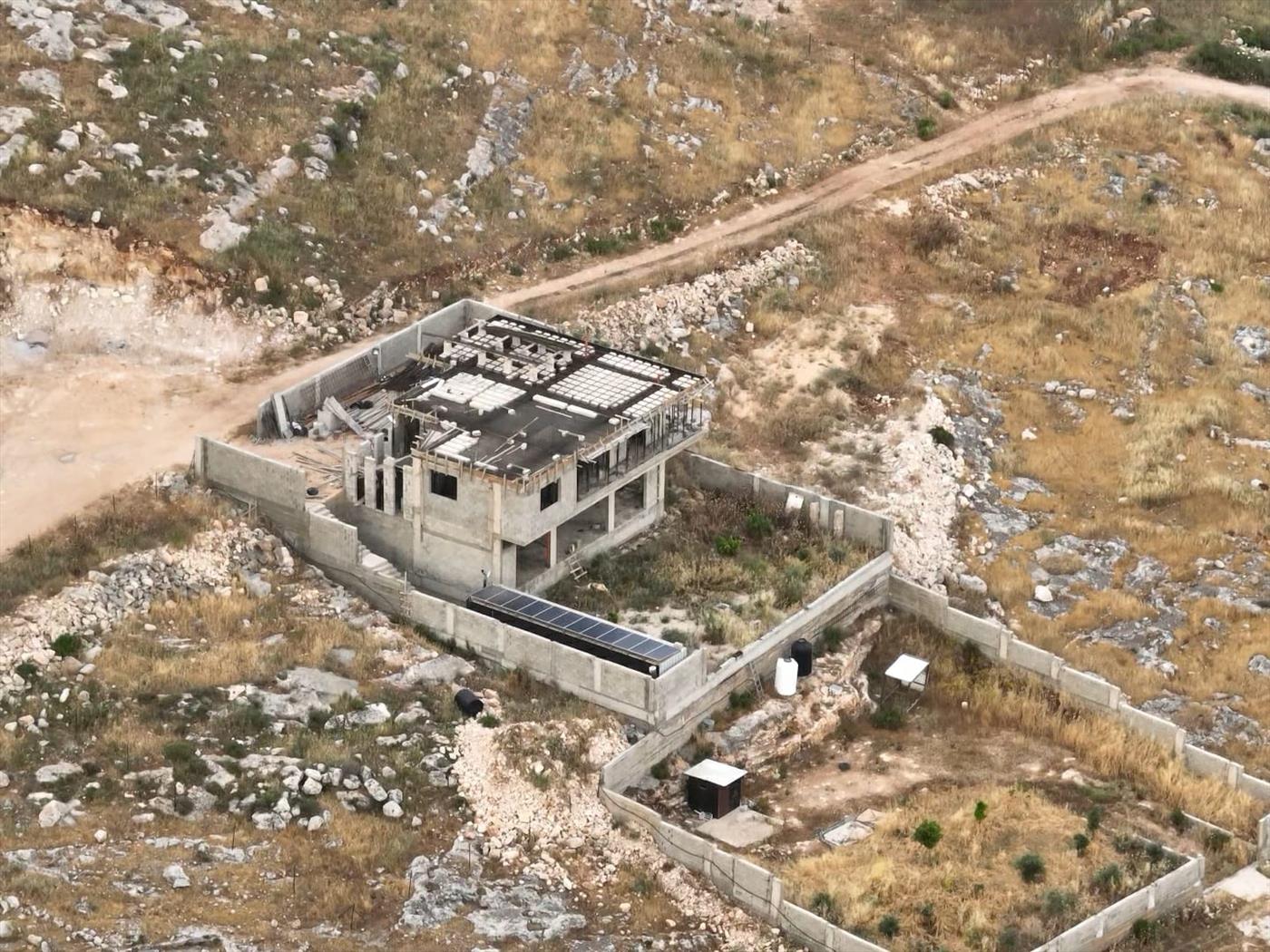
It should be recalled that a report published about a year ago by the Regavim organization claimed there was also a significant decline in illegal Arab construction in Area C. That report also claimed that one of the main factors for this decline was the damage to the PA's economy, one of the main reasons being the loss of income for Arabs who used to work in Israel and the in the settlements.
In recent weeks, a heated debate is taking place in the communities of Judea and Samaria regarding the issue of once again allowing Arab workers to work in the communities. Significant pressure is being exerted on the communities to approve the entry of Arabs—despite surveys showing high support for the massacre among Arabs in Judea and Samaria—based on the claim that without Arab workers, there will be a building freeze in the communities.
Opponents argue that bringing in the workers is not only a security threat and an opportunity for the enemy to gather intelligence on the communities, but it also creates an opposite effect: for every Jewish home built by Arab labor, more Arab homes will be built, as their construction costs are many times cheaper.
This dispute is not new. The religious-Zionist thinker Yechiel Pines wrote 130 years ago: "Arab laborers are nothing but a broken reed for the colonies, both in terms of their numbers and the advantage of their labor. Furthermore, there is cause for concern that, like the fool who revived the dead lion, we too shall suffer the consequences."
In the study of Zionist history, several prominent researchers argued that the initial years of Zionism were accompanied by a massive Arab immigration to the Land of Israel, with one factor being the sustenance they found working in the Jewish settlements. However, even researchers who claimed that the scope of Arab immigration was more limited, confirmed that in areas where Jewish settlements were concentrated, such as the Sharon region, there was a large increase in the Arab population, far exceeding natural growth. This explains how, among others, tens of thousands of Arabs from the Hauran region of Syria, came to work here and earned the name "Houranis".
In a column written by Ahad Ha'am after his visit to the Land 135 years ago, he analyzed that the Jews who arrived to settle mocked the Arabs, thinking them foolish, while the Arabs were successfully outsmarting them: "The farmers are happy when a Hebrew colony is established among them, as they receive good wages for their work and grow wealthy year after year, as experience has shown; and the owners of the large estates are also pleased with our arrival, as we pay them a high price for rocky and sandy land, a price they had never even dreamt of. However, should a time come when the life of our people in the Land of Israel develops to such an extent that they displace the Arab population to any degree, the latter will not easily abandon their place," wrote Ahad Ha'am at the time.
The data we are now revealing suggests that this is not merely theory but reality: the employment of Arabs leads to more Arab construction, and without it, there is a marked decline in Arab construction and their foothold in the Land.