- הרשמה לניוזלטר
- מועדון המשפיעים
- שימושון
- אודות
- תרום לנו
- צור קשר

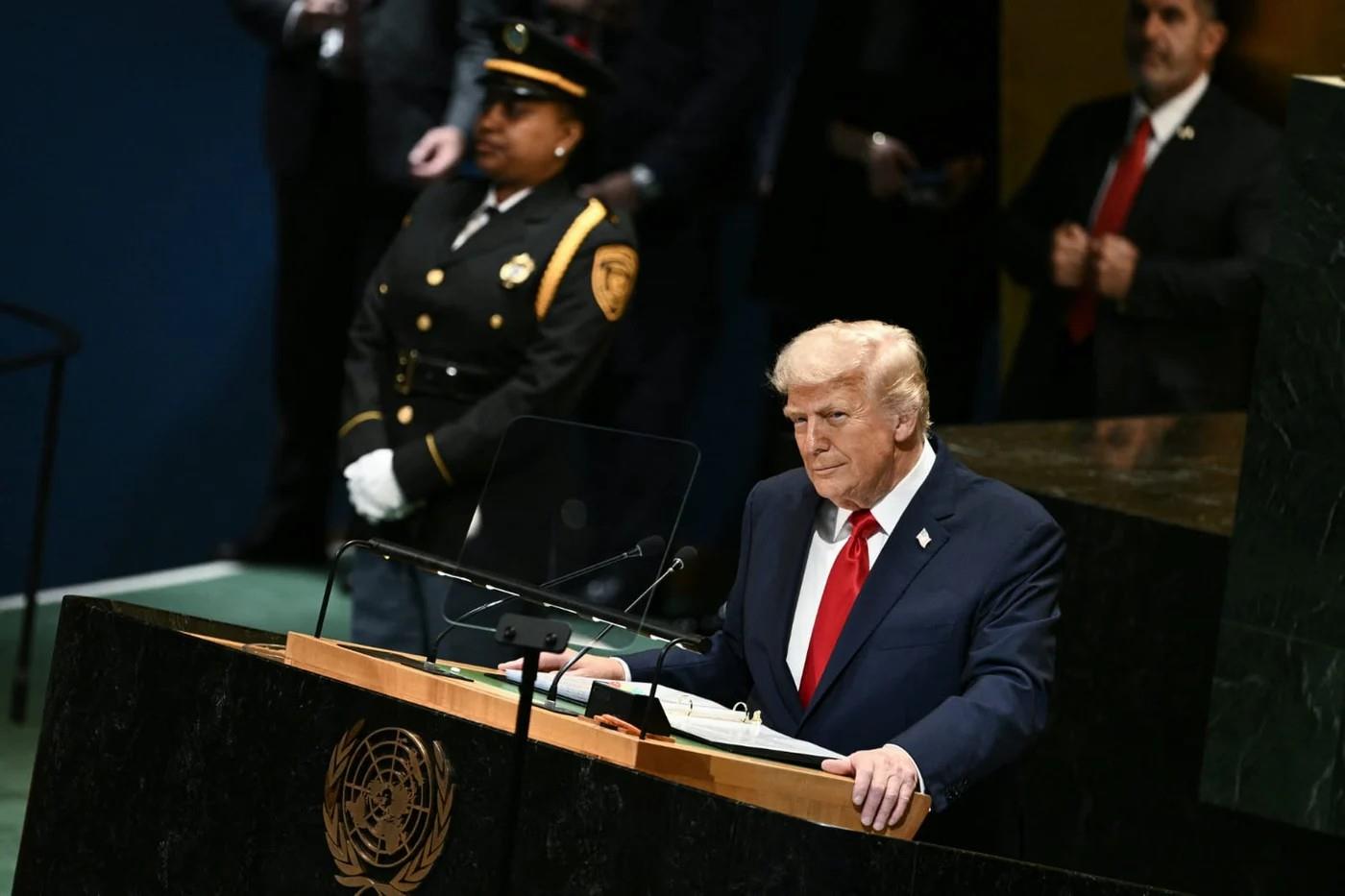
the UN Security Council voted on Resolution 2803, under the heading “The situation in the Middle East, including the Palestinian question,” and “the comprehensive plan to end the conflict in Gaza.” The vote, which dealt with the Trump plan—dubbed the “Peace Plan”—endorses the ceasefire in Gaza and calls on both sides to uphold it. Thirteen member states of the Security Council supported the resolution, while China and Russia abstained.
Prime Minister Netanyahu was quick to welcome the decision. But what does it actually contain? A close reading of the resolution shows that it is far removed from the “total victory” that Netanyahu promised. On the contrary, it raises grave concerns regarding the war's achievements.
According to the resolution, an international entity called the “Peace Council” will be established to oversee Gaza’s reconstruction. It will operate until the Palestinian Authority replaces it—after carrying out “reforms.” The UN resolution declares that this plan is a “realistic path” toward the creation of a Palestinian state, and that the United States will promote a “dialogue” between Israel and the Palestinians.
Beneath this Peace Council, a committee of “Palestinian technocrats” will be established—ostensibly non‑political experts, but in reality they will serve as Gaza’s de facto government. Hamas has already announced it does not seek to rule Gaza officially, but intends to infiltrate this technocratic framework with loyal operatives. The Peace Council will be headed by Trump. Though he has not specified who else will sit on the Peace Council, the UN resolution’s preamble praises the roles of the U.S., Egypt, Turkey, and Qatar.
The plan defines the establishment of a “technocratic” Palestinian regime in Gaza, followed by the PA “after reforms,” as a “realistic path to a Palestinian state.” The resolution recognizes the Palestinians’ right to self‑determination and mandates the U.S. to promote a dialogue between Israel and the Palestinians. Journalist Amit Segal argued yesterday that regarding a Palestinian state, the resolution “improves the situation,” since it does not tie Judea and Samaria to Gaza and defines a new entity in Gaza that is not the PA. But in reality, no force exists in Gaza that is not either Hamas or PA. Any reconstruction body will be a proxy of one or both. Judging by Mahmoud Abbas’s enthusiastic response, he clearly welcomed the resolution and pushed Arab states to support it. Israeli officials dismiss PA “reforms” as imaginary, however, the PA has already begun taking steps designed to secure American approval that reforms have been carried out.
The resolution mandates that the Peace Council will establish an “International Stabilization Force” (ISF), which Washington reportedly wants deployed by January, tasked with “ensuring Gaza’s demilitarization.” This force will operate “in close consultation and coordination with Egypt and Israel.” In effect, Israel loses its freedom of action in Gaza, becoming subject not only to American coordination but Egyptian as well. The force has been given a mandate until the end of 2027—two years. According to leaked drafts, its powers include “protecting civilians.” But what will happen when Hamas fires rockets at Sderot from within civilian areas? Will Israel be allowed to respond—or will it face an international force protecting Gaza’s population? This is only one of many troubling questions raised by a resolution that strips Israel of operational freedom and places IDF soldiers in the face of an international force authorized to open fire.
The resolution requires Israel to withdraw “according to agreed upon milestones and demilitarization processes,” with the international force taking control of the territory up to the perimeter.
Unlike traditional “peacekeeping” forces such as UNIFIL in Lebanon, this mandate is one of enforcement, with operational authority. Ostensibly this should help confront Hamas, but in reality none of the states Trump relies on intend to fight Hamas militarily. International law may permit Israel to act in self‑defense, but every action will require coordination and face legal scrutiny by the international force, with Egypt holding significant leverage to delay IDF operations.
The draft states the force will “protect civilians, facilitate and coordinate humanitarian aid, and support a trained and supervised Palestinian police under oversight.” The police must be vetted and unaffiliated with terror groups—but Israel will not be the one ensuring this. If Israel has intelligence that Hamas has infiltrated the armed Palestinian police, it will have to appeal to the UN force. Trump’s original plan envisioned consultation with Egypt and Jordan on training the new Gaza police force. Reports indicate that such training has already begun in Egypt and Jordan, in full cooperation with the PA. The fact that these are essentially PA police is reinforced by reports of EU plans to train thousands of PA police for Gaza deployment.
The resolution calls for a “full renewal” of humanitarian aid through cooperating organizations, including the UN, the International Red Cross, and the Red Crescent, with assurances that the aid will be used only for peaceful purposes and not diverted by armed groups. The Peace Council is also empowered to establish judicial bodies to manage public and humanitarian services in Gaza—effectively an international civil administration. As a result, Israel will lose much of its ability to close border crossings in response to terror activity, as any restriction of aid will be deemed a violation of the Security Council resolution. Moreover, since the Peace Council oversees which organizations deliver aid, Israel will have no authority over the coordination of aid delivery—opening the door for Muslim Brotherhood affiliated organizations to funnel assistance to Hamas more effectively than today. International control over “humanitarian corridors” will further erode IDF freedom of action, turning every military operation into an international incident and fueling campaigns to delegitimize Israel.
Additional problematic clauses in the draft grant the Peace Council authority over the movement of people in and out of Gaza. Even if the “right of return” is less relevant today due to the destruction in Gaza, will senior Muslim Brotherhood figures from Qatar be permitted entry? The plan even includes a clause offering amnesty to Hamas members who wish to leave Gaza.
The plan also suggests dividing Gaza if efforts to dismantle Hamas fail. The plan would then be implemented in “terror‑free zones where control would be transferred from the IDF to the ISF.” In other words, while the IDF fights Hamas in its strongholds, the plan opens the door to applying all the above measures precisely in the areas currently under Israeli control—those adjacent to the border.
On paper, this plan promises an end to the war, Gaza’s demilitarization, and generous reconstruction—in exchange for dismantling Hamas’s military power. In reality, it establishes an American‑regional international administration with enforcement powers, sets a formal path to a Palestinian state, grants amnesty to Hamas operatives who agree to “cleanse themselves,” weakens Israel’s leverage over aid and crossings, and inserts an international force into Gaza that will shadow every IDF operation. As always, the real question is not what is written on paper—but who will rule on the ground, who will pay the price, and whether anyone truly intends to dismantle Hamas’s power, or merely transfer its power from the military wing into the technocratic government of “New Gaza.”
Perhaps, with God’s help, the entire plan will collapse, the U.S. will fail to muster the international force, and everything will turn out for the better—so that after the conclusion of the hostages' return, the IDF will resume and complete the conquest it has not yet achieved. With God, everything is possible. However, operative decisions must be carefully evaluated based on the details.