- הרשמה לניוזלטר
- מועדון המשפיעים
- שימושון
- אודות
- תרום לנו
- צור קשר

A Year Without a Father
Thirty-year-old David Chai Hasdai’s children hadn’t seen him for over a year. His wife Naomi, who stayed by herself at their home in Givat Ronen, was forced to raise the children herself while their father and primary breadwinner was held under remand in prison. He was accused in a complex case and faced the threat of a decade or more of imprisonment.
This week, on the one-year anniversary of his imprisonment, a judge issued their ruling resulting in a resounding acquittal and Hasdai’s immediate release. “Only a servant of G-d is truly free,” read a sign printed by Hasdai’s friends for his release.
The Release of David Chai Hasdai
Justice Efrat Fink of the Lod District Court not only acquitted Hasdai, but also detailed the seriousness of the accusations against him. Despite the seriousness of the charges, Fink ruled that Hasdai’s version was true and that he was innocent of the charges. The 42-page verdict offers a glimpse into how the Shin Bet, the Judea and Samaria District Police (Yamar Shai), and the State Prosecution collude together to fabricate accusations and highlights their relentless attempts to imprison Hasdai at all costs.
Trial by Media
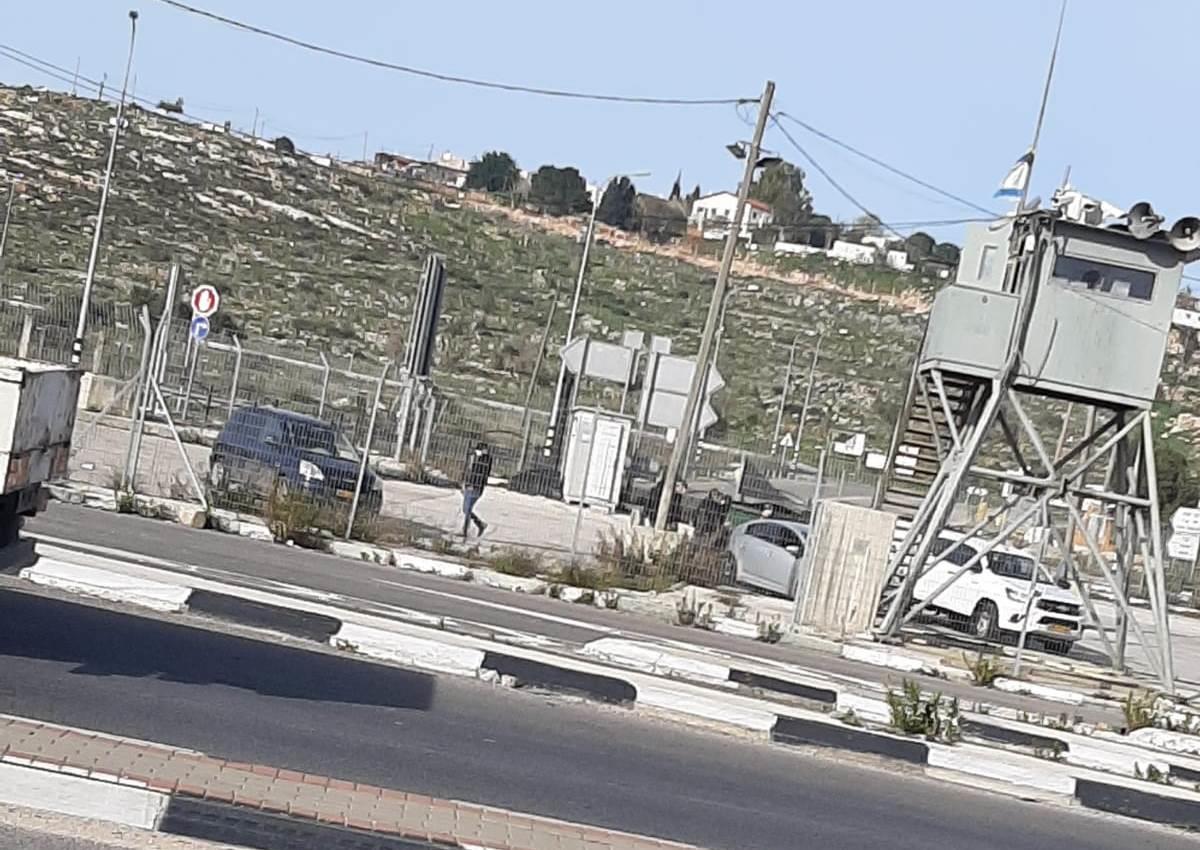
The incident for which Hasdai was charged occurred about a year ago, during an intense period in the Oct. 7th War and amid heightened terror attacks throughout Israel. A car carrying several Arab women entered the community of Givat Ronen, setting off concerns among residents and security forces, who suspected a possible attack. Community members quickly organized and young men who were at a nearby spring also arrived. The stones were thrown to chase away the suspicious vehicle and ultimately the car was set alight after the women fled. The women later claimed they had gotten lost on the way to Shechem.
Notably, in the months leading up to the incident, there were several security incidents near the community including an attack by a knife-wielding terrorist from a nearby village and a similar incident involving a car with Israeli license plates at the nearby spring where was released Hamas terrorist from East Jerusalem and an antisemitic Muslim activist from abroad were seemingly scoping out the site.
At the time, there was no gate was installed at the entrance to Givat Ronen and residents had prepared for possible terror attacks involving vehicles, given the community's proximity to Shechem. Regardless of the suspicious circumstances, the attack on the Israeli Arab women dominated headlines and drew strong condemnations. The media went into full press and the case received high priority both in the Shin Bet’s Jewish Division and for the Israeli Police.
Just a few days after the incident, David Chai Hasdai, a resident of the community, was arrested. He was taken to a Shin Bet interrogation room under harsh contributions.
Hasdai held to his own clear version of events throughout the interrogations and trial. He noted that on the particular Friday in question, he had driven back from the nearby spring to the community with his 4-year-old son in the car. A fellow resident at the entrance to the community shouted to him that the car in front of him had several Arab residents that were acting suspiciously. While the other resident called security forces, Hasdai stopped the vehicle, exited his car, and approached to understand the situation. The Arab driver apparently panicked,speeding off, and lightly hitting Hasdai. When she reached the entrance (where another resident’s car was parked to block potential attacks), she veered onto an internal dirt road in the community.
Hasdai explained that when he saw the security vehicle and the emergency team arriving, he returned to his frightened son, calmed him down, and drove home.
Hasdai noted that he was not present on the scene after that and only heard after the fact that the women had gotten stuck on the dirt road and that their car was stoned. Hasdai noted that he had acted reasonably given the need for vigilance under the circumstances upon observing a vehicle driving suspiciously with people they were not residents of what is a small community.
Framing the Narrative
But the Shin Bet and Israeli Police had already decided who was guilty and sought an indictment to respond to the media blitz. So they maintained their focus on Hasdai. Their main problem was that the Arab womens’ testimonies were full of contradictions, and they failed to identify Hasdai.
They consistently misdescribed the people involved in the incident. They described the man they saw in the car at the entrance—Hasdai— as fat and armed. But Hasdai is in fact thin and was unarmed.
At this point, the police should have conducted a lineup—a standard investigative procedure wherein multiple pictures are shown to the victims and they are asked to identify them. But the police chose not to do so, apparently based on the reports the women were already giving. Despite a police investigator’s claim to the court that they sought to extend Hasdai’s detention to perform a lineup, they never did so.
Instead, the complainants were summoned to make another statement after a suspicious phone call between a Shin Bet investigator and the three women wherein the Shin Bet investigator asked them to describe the attackers. The women said that they could not identify any of the attackers except the one with a weapon (again, Hasdai was unarmed).
At the police station officer Neria Megiddo of the Israeli Police showed them a single photo of Hasdai while "hinting that he was involved in the violent incident," according to the judge’s ruling. "This compromised the reliability of the identification as it didn’t involve a choice between options." The judge noted that the complainants seemed to reconstruct their memory using logic or bias after seeing Hasdai’s photo.
In court the lead investigator, Shai DeCosta, admitted he instructed the officers to show Hasdai’s picture, arguing that since Hasdai admitted to being at the scene, there was no dispute over his involvement despite the fact that Hasdai consistently noted that he was only present at the beginning of the incident before the women’s car got stuck on the dirt road.
Even after leading on the complainants to identify Hasdai, the case continued to have holes. One woman said Hasdai chased them and stole their bag, something that a different person was ultimately convicted for. Another woman claimed that he was armed, while a third said he threw stones.
Instead of going back to the drawing board, the police doubled down and summoned the women once again. This time they showed multiple photos, including Hasdai, though after they had been shown his photo already before. This time, one complainant said she was "70%" sure he was there. In court, she admitted that her confidence only came after the investigator reminded her she had already seen his photo.
Judge Fink ruled that the testimonies were full of contradictions and seemingly changed according to the investigation’s needs. She strongly criticized the way the investigation was conducted.
Another inconsistency arose in terms of the vehicle involved. Hasdai’s car was a full-size Honda, but all the complainants said the attacker’s vehicle was a smaller compact car.
Next, the investigators ordered a face-to-face between Hasdai and the complainants for them to hear him speak and better identify them. While two women arrived at the station, only one was allowed to interact with Hasdai. Similarly, standard procedure is for these face-to-face interactions to be recorded, but somehow the police claimed to have lost the tape.
In a subsequent interrogation after the interaction, Hasdai said he hoped it was recorded because Officer Megiddo was coaching the complainant throughout. Yet instead there was no recording and the only record was a written memo by Megiddo, which excluded any information that could have supported Hasdai’s version.
The face-to-face led the police to a new version of events claiming that Hasdai switched vehicles and chased the women in a different car. However Hasdai’s 4-year-old son was in his vehicle, something that the judge noted the prosecution never explained and which supported Hasdai’s version.
The Judge Attempts to Cover for the Prosecution
The State Prosecution which led the case wasn’t satisfied with the shaky version of events that the police provided. Thus police investigators made another round of “revisions.” Investigator Megiddo summoned the complainants again, and used leading questions to gather basic ‘yes’ or ‘no’ answers as needed.
This new version is what ultimately appeared in the indictment, and accused Hasdai of serious hate crimes, including assault, arson, and more. The prosecution filed a request to hold him in remand until the end of the trial.
When attorney Adi Keidar from Honenu reviewed the file, he was stunned by its inconsistencies and manipulations despite his years of experience with the police’s approach to Jewish residents in Judea and Samaria.
He requested a preliminary hearing to get the case thrown out even before a trial given the lack of basic evidence. Despite the flaws and leading use of Hasdai’s photo, Justice Ayala Oren, a former prosecutor declined to throw out the indictment. While she acknowledged that the identification was problematic she ruled for the prosecution and placed him under remand until the end of the proceedings. That one decision cost Hasdai a year of his life behind bars.
At this point, Hasdai’s attorneys at Honenu informed his friends and family that he was facing a long fight ahead. They mobilized to support his family and mount a strong defense. Attorney Keidar led the courtroom battle, exposing inconsistency after inconsistency and what he described as outright criminal conduct by the investigators.
"Every Time I Cleaned the Cell, They Moved Me to a New Dirty One"
Ultimately, Hasdai was acquitted in a courageous ruling by Judge Fink who found his account credible while the complainants’ accounts were contradictory and changed continuously. Fink criticized the police for their numerous investigative failures and Hasdai is explosing legal options to seek compensation for his suffering.
Of particular note was the harsh interrogations he experienced at the hands of the Shin Bet. Fink described these in the verdict as follows, “They took all his clothes, called him a terrorist, put him in a small cell with scraped walls, a hard mattress, smelly blankets, a squat toilet with urine and feces, and with just mechanical ventilation... He was taken out of the cell to interrogations blindfolded and handcuffed. During the interrogations, he was tied to a chair, blasted with freezing air conditioning, screamed at and humiliated.”
The prosecution argued that his silence under these conditions suggested guilt. He rejected this argument and noted that he had spoken with the police investigators, but the Shin Bet investigators only wanted to torture him. “Each time he cleaned the cell, they moved him to a filthy one again,” the verdict notes.
"They Try to Intimidate People Through Failed Criminal Cases"
Hasdai’s story isn’t unique. According to Uri Kirshenbaum, former deputy director of Honenu, a majority of high-profile “nationalist crime” cases against Jewish youth in Judea and Samaria in recent years have ended in acquittals.
Just over the past year, several young men were acquitted after being charged with assaulting left-wing activists, damaging mosques, assaulting police, or carrying out arson attacks. All were represented by Honenu and all spent long periods under remand in prison or under house arrest before finally being acquitted.
Generally Acquittals Are Rare in Israel's Legal System
Kirshenbaum notes that this isn’t typical in Israel. He notes that the prosecution takes an aggressive approach in nationalist cases and files indictments even without evidence. “They file an indictment, and at worst figure they’ll get an acquittal, but who will remember? The headlines they were able to make when they announced the indictment relieved the media pressure and the media won’t bother following up about the acquittal.”
Kirshenbaum further adds that those in the Shin Bet Jewish division opposed ideologically to the communities in Judea and Samaria also are unbothered by the acquittals. “They make the youth suffer for a year or two in custody, drive their families crazy, and maybe next time the youth will think twice before living there,” he says. “All the lies and failed approaches now being exposed in Netanyahu’s trial have been used for years. They try to intimidate people through failed criminal indictments. Most outrageous is the case of Amiram Ben Uliel, who was
convicted in a fabricated case related to the Duma affair, returns home to his wife and family. May it happen soon in our days.”
לכתבה בעברית>>